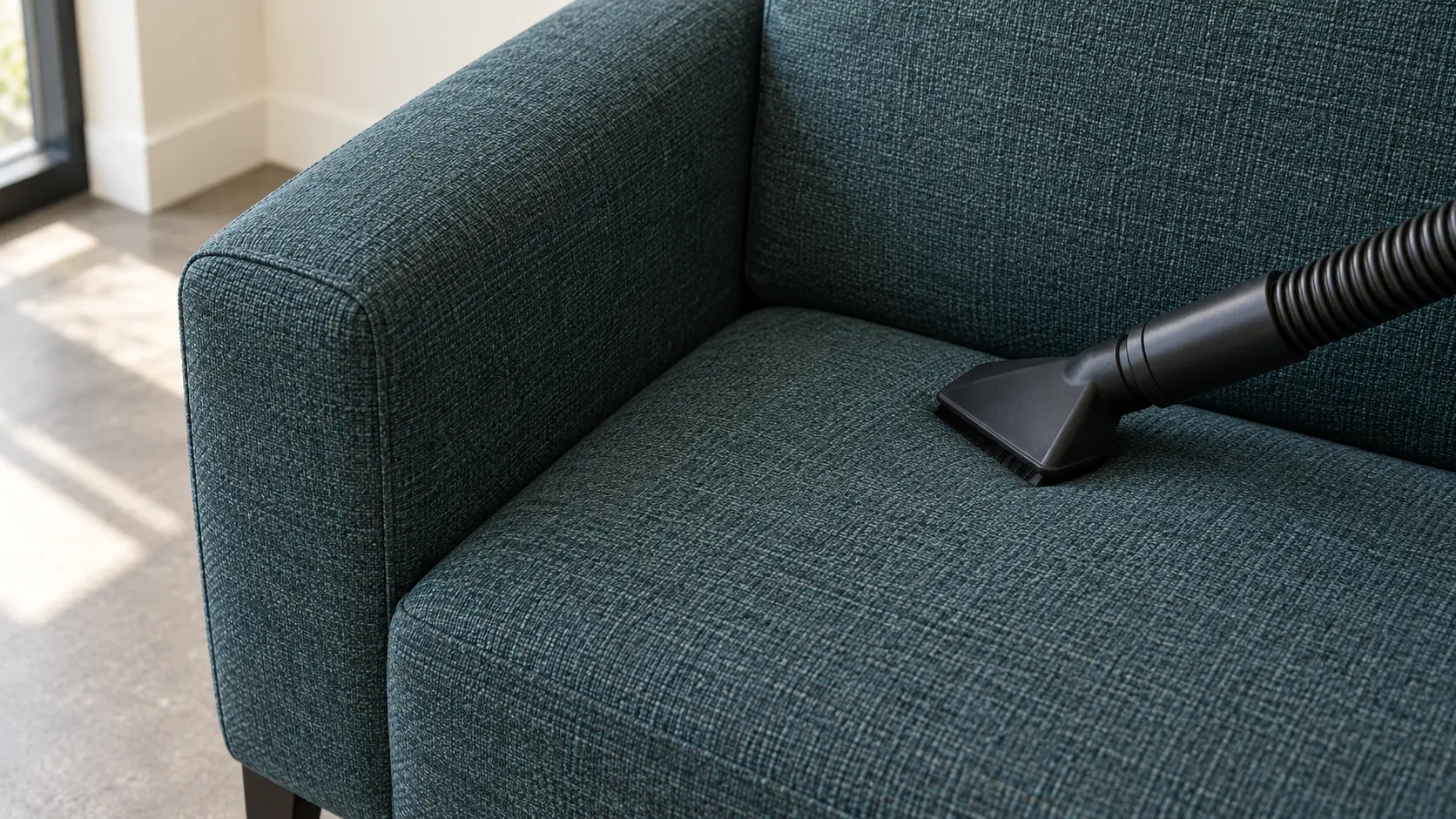
A fabric rated at 100,000 Martindale cycles can still be the wrong choice for a reception chair. Suppose the cleaner used by your contractor is excluded by the textile manufacturer. An impressive rub count will not make that cleaner suitable.
For an office reception in Cyprus, start with how the seats will be used and maintained. Then check the textile specification against those conditions. The Martindale rub test helps assess abrasion resistance; it does not approve the whole chair for your workplace.
Read the rub count without turning it into a lifespan
The test rubs a textile sample against an abrasive surface under controlled conditions. The reported cycles describe its resistance to that test. They are not a count of visitors, sitting hours or years of service. Muuto’s materials guidance explains the method and directs buyers to the relevant textile’s fact sheet.
As one reference point, the Association for Contract Textiles’ February 2025 voluntary guidelines for woven indoor upholstery specify 40,000 Martindale cycles under ASTM D4966 at 12 kPa for high-traffic/public-space applications. This is a defined industry benchmark, not a universal requirement for every reception or a Cyprus legal standard.
ACT also cautions that results above its guidelines do not predict a longer lifespan. Its guidance says Martindale and Wyzenbeek results cannot be converted into one another. Keep the test method beside the number when comparing specifications.
Ask the supplier to confirm suitability for your intended use. Once the required abrasion performance is established, investigate the conditions most likely to cause trouble in your particular room.
Describe the cleaning job before choosing the colour
Give the person responsible for cleaning a place in the selection process. “Easy to clean” leaves too much open: a reception desk team dealing with an occasional coffee spill has a different task from a contractor following a fixed daily cleaning procedure.
List the person who handles fresh spills, the product they use and the equipment available for vacuuming. Include somewhere to keep a damp seat out of use. If the plan requires equipment or staff time you do not have, the proposed care routine is incomplete.
Kvadrat’s upholstery-cleaning guidance calls for checking the fabric’s care instructions, trying cleaning solutions on an inconspicuous area first and allowing upholstery to dry completely before reuse. These steps make drying time and access to the seams practical buying questions.
Do not apply a cleaner intended for desks or floors to upholstery by default. Send the exact product name and intended method to the furniture supplier. Where chemical cleaning is required, request written compatibility information covering the concentration, application and any rinsing or drying instructions. A general claim such as “washable” does not answer those questions.
A reception example: why the preferred fabric may change
The following is a hypothetical selection exercise, not a Studio Office project or a comparison of products on sale.
A business is choosing upholstered chairs for a reception used throughout the working day. Visitors sometimes bring coffee. Two seats will stand beside a large window. The cleaning contractor proposes using the same ready-to-use cleaner across the reception.
The designer prefers a woven fabric with a reported 100,000-cycle Martindale result. A second candidate reports 60,000 cycles under the same method. Assume both meet the project’s agreed abrasion requirement and are approved by the furniture manufacturer for the chosen chair.
The first fabric’s care instructions exclude the proposed cleaner. The second has written compatibility confirmation for that specific cleaning procedure. It would be a mistake to select the first purely because its rub count is higher.
There are two workable paths. The business can adopt a separate, approved upholstery-cleaning routine for the preferred fabric, with the contractor’s agreement. Or it can continue assessing the second fabric against the remaining requirements. If the cleaning procedure cannot change, the first option is unsuitable for this brief.
The window seats still need a separate decision. Request the colourfastness-to-light result and the manufacturer’s advice for the proposed position. If either candidate is unsuitable there, consider another fabric or a different seat position. An abrasion score cannot settle the sunlight question.
Record the reason for the choice alongside the fabric code. That record is useful when a replacement cleaner, a new contractor or a later furniture order is proposed.
Check the risks that the abrasion number leaves open
The ACT performance framework treats abrasion, colourfastness to light, wet and dry colour transfer, physical properties and flammability separately. Use the relevant evidence for each requirement instead of expecting one number to cover everything.
| Condition in your reception | Evidence to request | Decision before ordering |
|---|---|---|
| Seats close to glazing | Lightfastness result and advice for the intended position | Confirm the fabric and location together; arrange shading or revise the selection where needed. |
| Appearance matters between maintenance visits | Pilling result (formation of small fibre balls), physical sample and care guidance | Assess the surface texture you can maintain, as well as the colour you prefer. |
| Regular cleaning with a specified product | Written compatibility for that product and procedure | Resolve any conflict before approval; do not leave it for the cleaning team to discover. |
| Seams, deep gaps or tightly upholstered corners | Manufacturer approval of the fabric on the exact chair, plus a sample chair where possible | Check cleaning access and the finished upholstery construction. |
| A project with specified fire-performance requirements | Relevant evidence for the proposed upholstery construction | Have the project’s responsible designer confirm acceptance of the actual specification. |
A colour-transfer result for the upholstery concerns dye coming from that textile. It is not a guarantee that colour from a visitor’s clothing cannot mark the seat. ACT’s explanation of wet and dry crocking makes this distinction useful when discussing pale fabrics.
Approve the fabric on the furniture
Inspect a sample chair where possible, with attention to the places a cleaning nozzle or cloth must reach. Ask how the shortlisted textile will be fitted to that model. Check the junction between seat and back, the front edge and any removable components. If a cover unzips, confirm whether it is intended for removal by the user and how it may be cleaned; a zip alone is not permission to machine-wash it.
Studio Office’s reception and lounge seating collection includes different upholstered forms. For example, the Muuto Oslo Bench is offered with textile upholstery, with variants confirmed through an enquiry. Use the exact furniture model and proposed textile code when asking for care information. A fabric shown elsewhere in a brand’s range is not automatically an approved option for every model.
Before authorising the order, keep a short approval record with these fields:
- Furniture: model, configuration, quantity and intended positions.
- Textile: manufacturer, collection, colour code and approved physical sample.
- Performance: abrasion method and result, plus the other evidence required by the brief.
- Maintenance: agreed products, procedure, responsible team and arrangements while seats dry.
- Future repair: whether a cover or upholstered component can be replaced, and how availability will be checked.
Pass the care instructions to the cleaning team with the furniture. Keep any proposed change of cleaning product subject to the same compatibility check.
For reception seating in Cyprus, send Studio Office your seating requirements, a photograph or plan of the room and the cleaning procedure you need to retain. Include any shortlisted fabric codes so the discussion can address the actual combination you intend to buy.