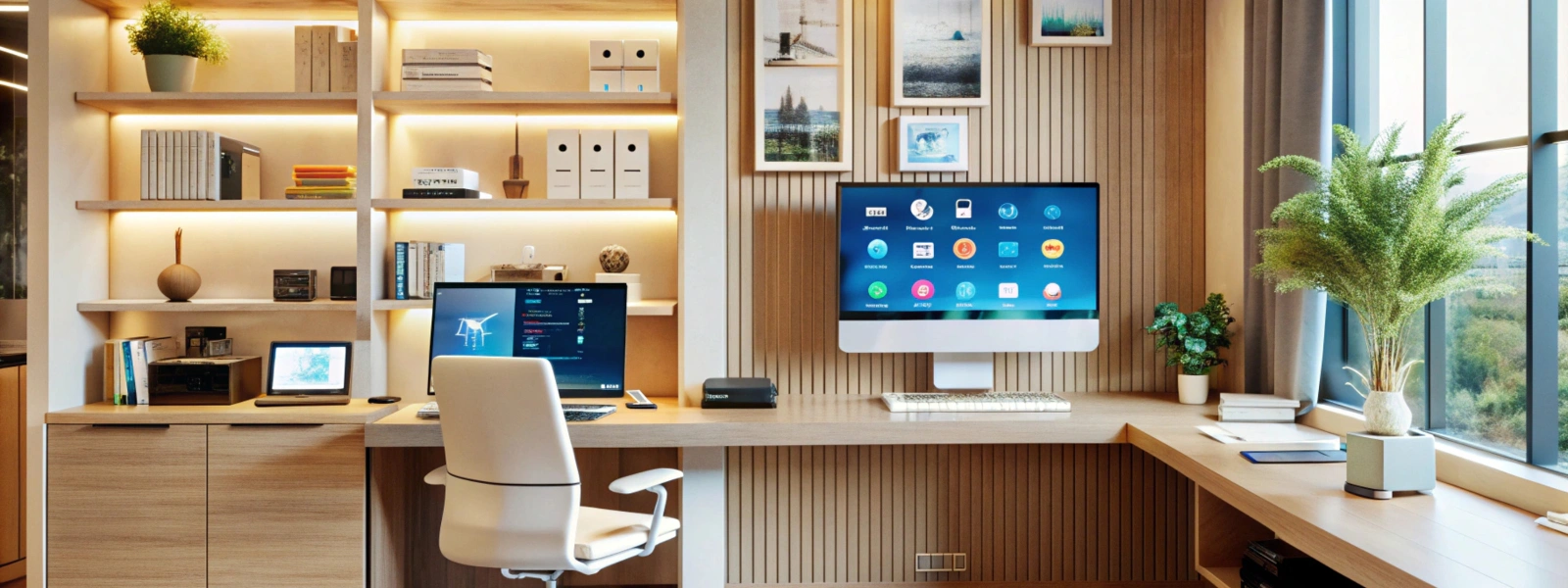
A small office does not have to feel cramped. With the right office furniture, you can create a workplace that feels organised, comfortable, and easy to use.
The key is to choose furniture that fits the space without reducing comfort or function. Compact desks, smart storage, flexible seating, and modular solutions can help you make better use of every square metre.
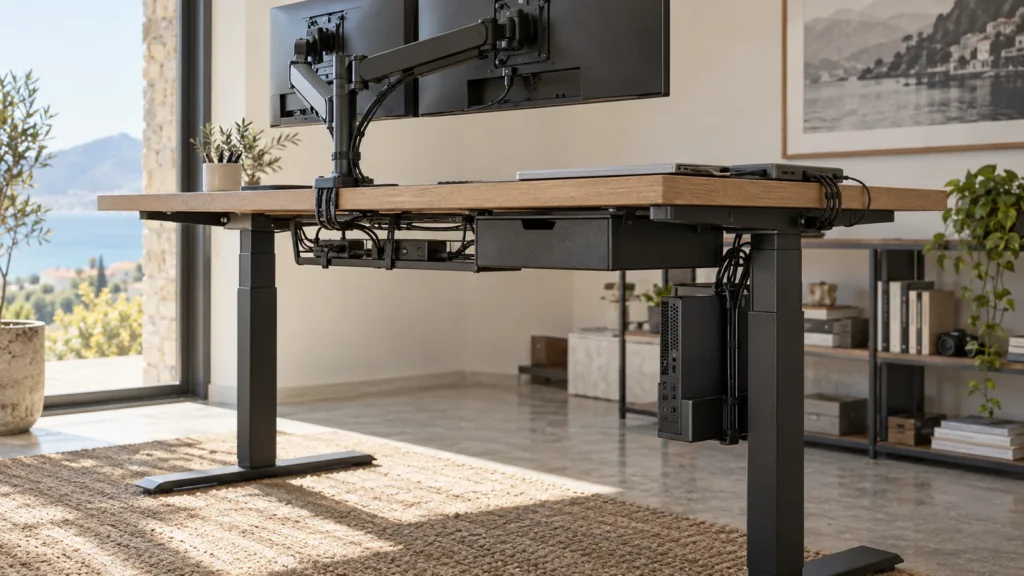
In this guide, we explore 10 space-saving office furniture ideas that can help small workplaces make the most of their available space.
What’s Included in This Article
- 10 office furniture ideas for small spaces
- How to use vertical space
- Ways to create flexible work areas
- Tips for choosing furniture for a small office
- Common mistakes to avoid
1. Choose Compact Office Desks
Large desks can quickly take up most of the available floor space in a small office. Choosing compact desks can give employees enough room to work while leaving more space for movement.
Consider desks with smaller depths or widths where appropriate. Bench-style workstations can also be useful when several employees need to share one area.
The goal is not simply to choose the smallest desk available. The desk should still provide enough surface area for computers, documents, and everyday work.
2. Use Desks With Built-In Storage
When floor space is limited, every piece of furniture should work efficiently.
Desks with built-in drawers, shelves, or storage units can reduce the need for separate cabinets. This keeps important items close to the workstation while helping the rest of the office stay clear.
Integrated storage can also create a cleaner look by reducing clutter around the workplace.
3. Make Better Use of Vertical Space
Small offices often have more wall space than floor space. Using vertical areas can help increase storage without taking up valuable workspace.
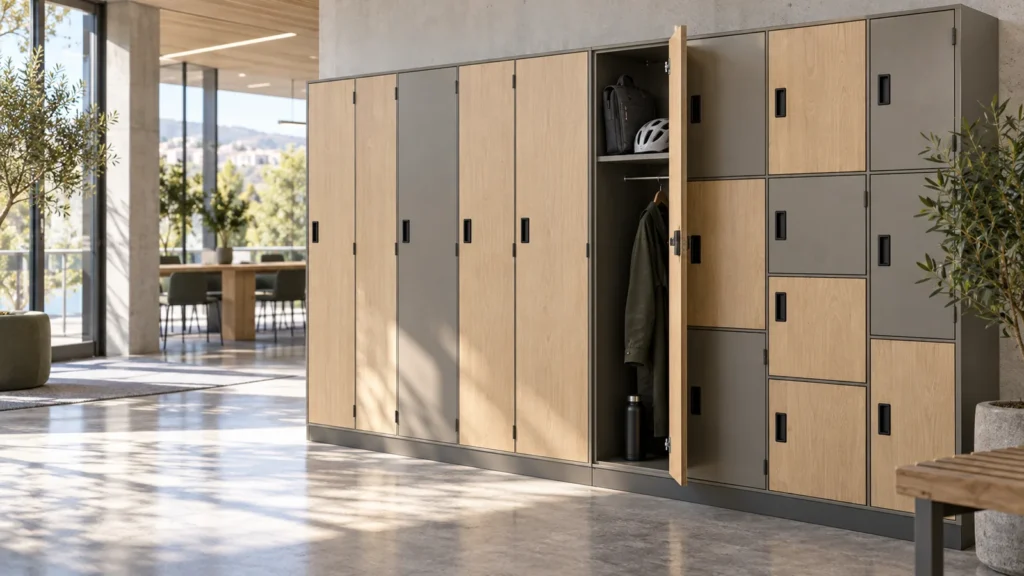
Tall shelving units, wall-mounted storage, and vertical cabinets can provide useful storage while keeping the floor more open.
However, storage should still be easy to access. Frequently used items should be kept within comfortable reach, while less-used items can be stored higher up.
4. Choose Modular Office Furniture
Modular furniture can be a smart choice for offices where space needs change over time.
Modular desks, storage units, partitions, and seating can often be moved or rearranged to suit different activities. This makes it easier to adapt the office without replacing all the furniture.
For small businesses, this flexibility can be especially useful when teams grow or working styles change.
5. Use Bench Workstations
When several people work in a limited area, individual desks can create unnecessary gaps between workstations.
Bench workstations place desks together in a more efficient layout. They can provide employees with individual work areas while making better use of the available floor space.
Screens or desk dividers can also be added where more privacy is needed.
6. Consider Flexible Meeting Tables
A traditional large meeting table may not be practical in a small office. Instead, consider a smaller table or a modular meeting solution.
Tables that can be moved, folded, or rearranged can support different activities. A meeting area could be used for team discussions in the morning and another purpose later in the day.
This approach helps one area serve several functions.
7. Choose Multi-Functional Seating
Seating can take up more space than expected, especially when chairs are spread around meeting, reception, and breakout areas.
Multi-purpose seating can help reduce this problem. For example, lightweight chairs can be moved between different areas when needed.
Stackable chairs can also be useful when additional seating is only required occasionally. They can be stored away when they are not in use.
8. Use Smart Storage Cabinets
Good storage is important in every office, but large cabinets can make a small room feel even smaller.
Choose storage based on what you actually need to keep. Cabinets with a suitable height and width can provide storage without overwhelming the room.
Sliding doors may also be useful in areas where there is not enough space for cabinet doors to open fully.
A well-planned storage system can also reduce clutter, helping the office feel more open.
9. Create Flexible Work Zones
A small office may need to support many different activities, including focused work, meetings, teamwork, and informal discussions.
Instead of creating a separate room for every activity, use furniture to define flexible work zones.
A workstation can support individual work, while a small table and chairs can create a meeting area. Screens, partitions, or shelving can help separate these areas without making the office feel closed in.
This allows one room to support several work styles.
10. Choose Furniture That Matches the Space
One of the most important rules for a small office is to consider the room before choosing furniture.
Measure the available space, including doorways, walkways, windows, and access points. Then consider how employees will move around the room.
Furniture that looks suitable in a showroom may not work well once several pieces are placed together. The layout should allow people to move comfortably while keeping desks and other furniture easy to access.
A good office layout should balance function, comfort, storage, and movement.
How Can You Make a Small Office Feel Bigger?
Furniture selection is only part of the solution. The way furniture is arranged can also affect how spacious the office feels.
Keep main walkways clear and avoid placing too many large items in one area. Use consistent furniture styles and avoid unnecessary pieces.
Light-coloured furniture and open shelving can also help create a lighter visual appearance. However, the most important factor is having a layout that supports the way the office is actually used.
Common Mistakes When Furnishing a Small Office
One common mistake is buying furniture based only on appearance. A desk or cabinet may look good but still be too large for the available space.
Another mistake is adding too much furniture. Small offices can quickly become crowded when every available area is filled.
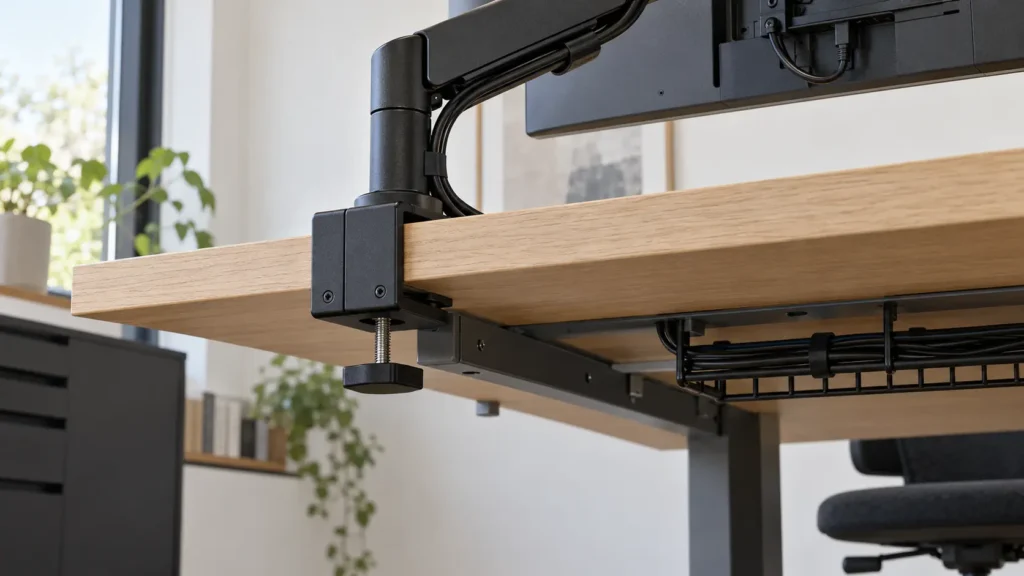
It is also important not to sacrifice ergonomics to save space. Employees still need suitable desks, chairs, monitor positions, and enough room to work comfortably.
The best solution is to find furniture that uses space efficiently while supporting everyday work.
FAQs About Office Furniture for Small Spaces
What is the best office furniture for a small space?
Compact desks, modular workstations, vertical storage, flexible meeting tables, and multi-purpose seating are useful choices for small offices.
How can I fit more desks into a small office?
Bench workstations can make better use of floor space than separate desks. However, the layout should still provide enough room for movement and comfortable working.
Is modular office furniture good for small offices?
Yes. Modular furniture can be moved and rearranged as the needs of the workplace change, making it a flexible option for smaller offices.
How can I add storage without using too much floor space?
Use vertical storage, wall-mounted solutions, and suitable-height cabinets. Desks with integrated storage can also reduce the need for additional furniture.
Should I sacrifice comfort to save space?
No. Space-saving furniture should still provide a comfortable and practical working environment. Ergonomics should remain an important part of the decision.
Conclusion
A small office can still be a productive and comfortable workplace. The key is to choose furniture that makes efficient use of the available space.
Compact desks, modular workstations, smart storage, flexible tables, and multi-purpose seating can help create a more practical layout without making the office feel crowded.
Before buying furniture, consider how the space is used, how people move through it, and what the business may need in the future. With the right planning, even a small workplace can support different work styles and provide a professional environment.
The right office furniture can help you make better use of limited space while creating a comfortable and professional workplace.
Visit Studio Office showrooms in Nicosia, Limassol, and Larnaca to explore office furniture and workspace solutions designed for different business needs.
Key Takeaways
- Choose furniture that fits the size and layout of the office.
- Use vertical space for additional storage.
- Consider modular and flexible furniture.
- Bench workstations can maximise desk space.
- Use furniture to create flexible work zones.
- Do not sacrifice comfort or ergonomics to save space.
- Plan the full layout before buying furniture.